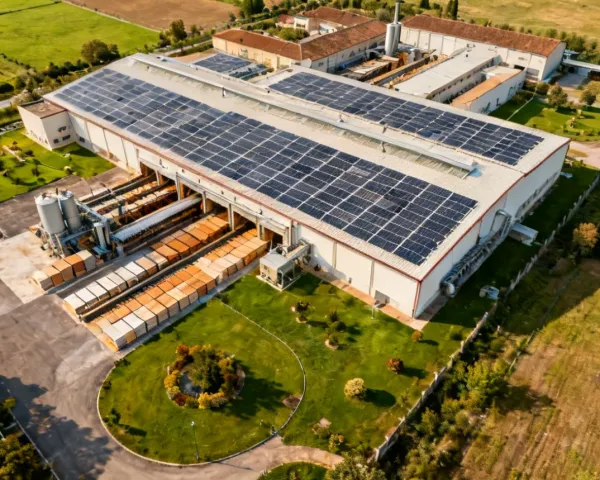
Marazzi believes the surfaces that shape spaces should sustain the world around them. Our sustainability program spans raw material sourcing, manufacturing efficiency, and end-of-life responsibility.
Marazzi's tile forming and glazing processes generate slurry wastewater. Through a proprietary closed-loop filtration and recirculation system, 92% of process water is recovered and reused. The remaining 8% undergoes treatment to municipal discharge standards before release. We target 95% recovery by 2027.
Our continuous roller kilns operate on natural gas with heat recovery systems that capture exhaust thermal energy for pre-drying body materials. Since 2015, kiln energy intensity (kWh per m² produced) has been reduced by 28% through burner optimization and insulation upgrades. We are evaluating hydrogen co-firing trials at our Sassuolo facility for 2026.
Select Marazzi collections incorporate up to 35% post-industrial recycled ceramic body material — specifically grinding dust and kiln reject material from our own production. This reduces virgin clay extraction and cuts embodied carbon in the product. Exact recycled content percentages are declared in each product's EPD.
Marazzi participates in the EU's EPREL product registry and publishes full material ingredient disclosures for specification-grade products. We require Tier 1 raw material suppliers to meet ISO 14001 and prohibit extraction from protected geological sites. Our raw material sourcing report is updated annually.
The most sustainable tile is one that never needs replacing. Marazzi products tested to PEI V wear resistance maintain visual and structural integrity for 50+ years in commercial applications. We publish factual service-life data in our technical documentation — because specifying a durable surface is itself an environmental act.
Claims without evidence are marketing. Marazzi backs every sustainability statement with third-party certification, independently verified EPDs, and publicly accessible test data.